

Quick Answer
Primary Causes (95% of cases): Poor diet (too much salt), lack of physical activity, obesity, and genetics. It develops slowly over time.
Secondary Causes (5% of cases): Kidney disease, sleep apnea, thyroid problems, or certain medications. This type appears suddenly.
Top 5 Modifiable Risk Factors
Unhealthy Diet
Too much sodium (salt) holds water in your body, increasing pressure. Too little potassium prevents you from clearing that sodium.
Physical Inactivity
Exercise strengthens the heart, allowing it to pump with less effort. Lack of movement leads to higher heart rates and more force on arteries.
Obesity
More body weight means you need more blood to supply oxygen to tissues, which increases the pressure on your artery walls.
Alcohol & Tobacco
Tobacco damages blood vessel walls immediately. Heavy drinking can raise blood pressure to unhealthy levels over time.
Understanding readings
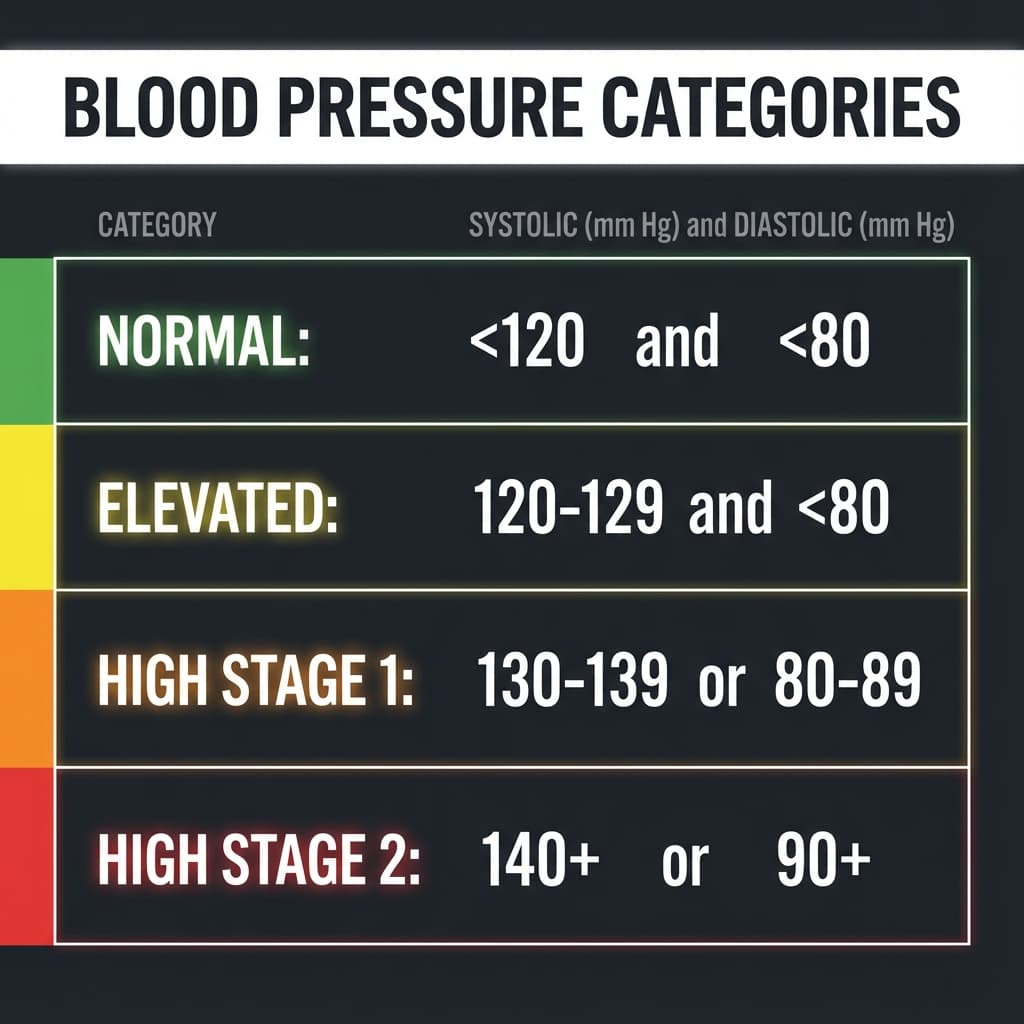
| Category | Systolic (Top) | Diastolic (Bottom) |
|---|---|---|
| Normal | Less than 120 | Less than 80 |
| Elevated | 120 - 129 | Less than 80 |
| Stage 1 Hypertension | 130 - 139 | 80 - 89 |
| Stage 2 Hypertension | 140 or higher | 90 or higher |
| Hypertensive Crisis | Higher than 180 | Higher than 120 |
Hypertensive Crisis Warning
If your pressure is higher than 180/120, wait 5 minutes and test again. If it is still high, contact your doctor immediately. If you also have chest pain, vision problems, or difficulty speaking, call 911.
Medical Review
Reviewed by: HealixAI Clinical Team
Last Updated: October 16, 2026
Sources: American Heart Association, Mayo Clinic